Bellevue condo group feels frustrated over light-rail discussion
Published 9:36 am Friday, April 1, 2011
In the ever-raging debate over Eastlink light rail, the Bellevue City Council continues to disagree with Sound Transit over South Bellevue alignments with one of the points of contention being Bellevue’s desire to support the route it feels better protects neighborhoods.
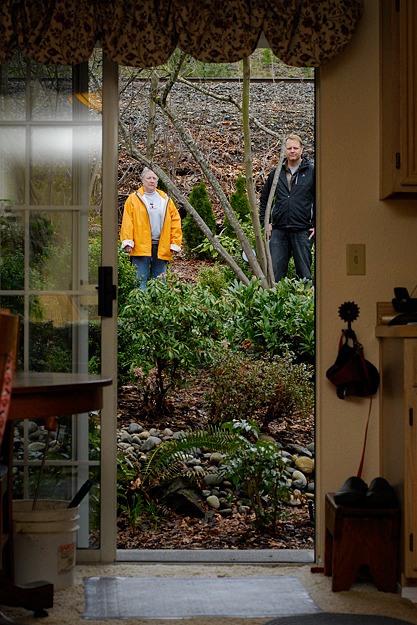
Don’t tell that to Walt Casto.
“I think it’s a myth they keep using to help make their point with the other neighborhood,” he said.
Casto is the vice-president of the Mercer Park Condominiums, one of several complexes that would be situated just feet from the train if Bellevue gets its way and Sound Transit switches its preference to the B7 route. The route goes around the east side of the Mercer Slough and runs parallel to Interstate 405 heading into downtown.
Casto is one of a number of residents who lives on the B7 line who has shown frustration with the council’s choices.
They don’t understand why Bellevue spent $670,000 to fund a study to optimize the route as Sound Transit has shown it favors the Bellevue Way/112th route. Additionally, Bellevue and Sound Transit face a difficult $150 million funding gap for a $300 million tunnel downtown, a piece both the council and Sound Transit heavily favor.
“At this time, it seems like a great deal of money is being wasted in regard to extensive studies of studies of studies and that money could have gone to studying better ways to mitigate noise for either area,” Casto said.
Casto says residents there will be exposed to extensive noise and construction impacts. They already live in proximity to I-405.
For just that reason, many B7 supporters say the line there would allow Sound Transit to add mitigation measures that would deal with the freeway and light rail.
“By putting in a very high noise wall, not only will we eliminate the vast majority of noise from the train, but secondly we will even improve the noise coming off 405,” said Joe Rosmann, president of the pro-B7 group Building a Better Bellevue.
Sound Transit favors a route that sends the train down Bellevue Way and 112th Avenue into downtown, through the Surrey Downs neighborhood. Building a Better Bellevue is in support of the B7 because it “respects the neighborhoods, the environment, and our pocketbooks,” according to the group’s website.
The various alignments pit neighborhood against neighborhood. Whatever the final decision, many residents will be unhappy. Casto and other residents along 118th are now up against residents of Surrey Downs, many of whom oppose Sound Transit’s desire to run light-rail down Bellevue Way and 112th Avenue. What it comes down to is two neighborhoods, and organized groups, that say they both want to see light-rail come to Bellevue, but not in their back yard.
“Whichever route we chose in the B segment, there will be residents who are affected,” said Bellevue Council Member and Sound Transit Board Member Claudia Balducci, one of three Bellevue council members in favor of the Bellevue Way/112th line. “We owe an obligation to all of them to look at how to best mitigate those impacts.”
The noise problem
The chief concern among neighborhoods that sit near the alignment is the problem of noise.
According to Sound Transit’s figures in the Supplemental Draft Environmental Impact Statement, which don’t take into account any changes that could come from the B7 study, the B7 has significantly higher noise impacts than the B2M route – 150 units will experience noise issues to 68. That results from many residents’ proximity to the rail line, said Eastlink Program Manager Don Billen. The primary means of mitigation for these new noise impacts comes in the form of a sound wall that would go up in between the tracks and the homes.
Council Member Jennifer Robertson, one of four council members who favor the B7 option, says a sound wall would be more effective in the Mercer Slough neighborhood because the homes sit well below the tracks, as opposed to Surrey Downs where most residences will be perched above the rail line.
“A whole part of (the B7) study is to see if this alignment can be created in such a way that impacts are lessened and that they meet costs and ridership goals of having a really effective light-rail line,” Robertson said.
Sound Transit’s first option for noise mitigation is to put in a sound wall, which would happen on either route. Billen said in most cases this is all that is required. In situations where more mitigation is needed, crews will install thicker and stronger windows and doors to keep some of the noise out. According to SDEIS mitigation efforts would lead to no long-term noise impacts. On the B2M line, Sound Transit said some residual outside noise impact could occur in six multi-family units and eight homes.
Other impacts
According to Sound Transit’s numbers, the B2M requires taking 47 residential units, while the B7 doesn’t requires a single property acquisition. Jannine McDonald, president of the Brookshire Condominium board, said the project would cause at Brookshire. While the removal of homes, most of which would come after voluntary buyouts, would create a large buffer between the rail line and the remaining units, no such buffer exists at this point. The elevation difference will offset the rail somewhat, but the train lies very close to units at many complexes on 118th.
“In places the proposed tracks would be within 50-70 feet of over 40 bedroom windows and within 120 feet of hundreds of condominium homes in both Brookshire and Mercer Park,” said Brookshire Condominium Board President Jannine McDonald. “The impacts will be both noise and visual blight.”
The unanswered question that remains in the B7 being studied is the potential impact of a new park-and-ride station. Consultants Arup International have proposed placing the station between Bellevue Way and 113th Avenue Southeast. The station could require condemnation of 13 parcels, many of which are developed, Bellevue’s B7 Project Manager Maher Welaye said at an open house earlier this year.
What it comes down to is some neighborhood is going to be affected. Billen said the lines were designed to go along the edges of residential neighborhoods rather than slice through the center. And in the end, Casto and other residents on both sides have stated the desire to bring the train to Bellevue.
“We do want it,” Casto said. “People would use it; I would use it myself. It will be tough for every area that has this done. I would hope that they would try to work with the neighborhoods that will be affected by this.”
Nat Levy can be reached at 425-453-4290.
A tale of two alignments
B2M – Sound Transit’s preferred alignment. Tracks would go along the east side of Bellevue Way, and later 112th Avenue Northeast, with stations at the South Bellevue Park and Ride Southeast Eighth Street before heading into the C segment. Proponents point to higher ridership and lower cost projections as the primary reason to use this alignment through South Bellevue. Opponents decry the traffic disturbances that could result from crossing the street, and the noise problems that could come from bells and squealing wheels. Many local residents have asked for buyouts of their homes with this route coming. Sound Transit favors this alignment for South Bellevue by an 18-0 margin.
B7 – Bellevue’s preferred alignment. Trains would exit I-90 and travel across the Mercer Slough and travel along the BNSF rail corridor into downtown. Bellevue is still studying the route to optimize cost and ridership projections. The alignment features a new park and ride station at 113th Avenue Southeast just after the train exits the freeway. Proponents say the B7 would not have the same traffic impacts as B2M, and mitigation will be easier because of the surrounding topography and a sound wall is already in place to protect nearby residents from I-405 noise. Opponents are weary of the lack of riders that could come from the segment. Sound Transit’s SDEIS says that construction risks are high due to unplanned peat movements in the Mercer Slough. Bellevue favors the segment by a 4-3 vote.