Wildlife abound at Nisqually refuge | Hiking the Evergreen State
Published 11:00 am Monday, July 6, 2026

Editor’s note: As in summers past, we’ll be spending time during July and August focusing on the great outdoors: namely, some of the noteworthy campgrounds and trails found in the Evergreen State – and maybe just a few opportunities for a good, long walk. Most of the of the destinations will be within a reasonable driving distance from the Plateau. This series will extend into August and, hopefully, provide encouragement to enjoy life outside – whether pitching a tent or “glamping” in a luxurious motor home, whether walking a paved pathway or mountain trail.
This series begins with a look at the Nisqually Wildlife Refuge. Week two will bring a tale from Fort Warden State Park. After that, the only certainty is that it will be outdoors.
All campgrounds and trails were visited recently by the author, his wife and Rosie, a great dog. They aren’t exactly roughing it these days, having long ago abandoned a tent for a travel trailer.
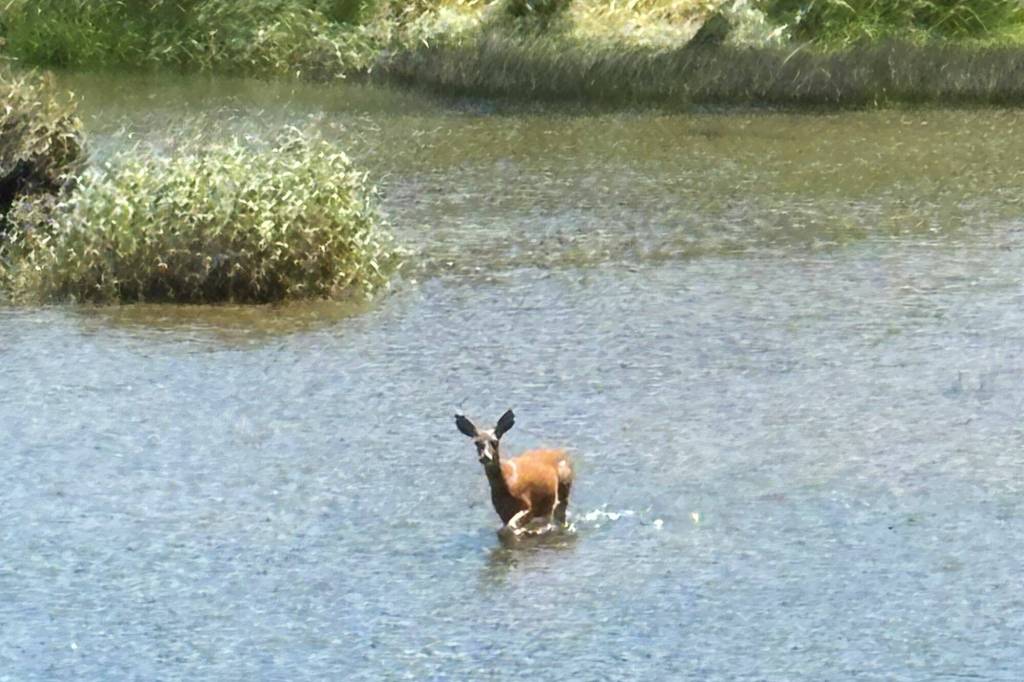
A mama whitetail deer stands knee-deep in the reeds surrounding a small pond, carefully watching her fawn venture into the cool, shaded water. A butterfly flutters by and, close to a trail, a chipmunk skitters from one tree branch to another.
Pretty awesome, right?
That was just one of the scenes greeting visitors during a recent trek to the Billy Frank Jr. Nisqually National Wildlife Refuge.
This sanctuary fits into the “good, long walk” category, connecting land and sea where a freshwater river meanders and eventually joins the salty, marine waters of South Puget Sound.
When visiting the refuge, plan on spending some time: you would be doing yourself a disservice to race through the Nisqually River Delta territory without taking time to stop, breathe deeply, silence your phone and enjoy the natural surroundings.
The federally-protected and managed acreage offers four miles of trails that highlight the diversity of the delta. Take a look at native plants, perhaps spot fish or an amphibian in the slough and enjoy the songbirds chirping overhead.
On average, people spent about two hours strolling the trails – some paved, some gravel and some a wooden boardwalk. An easy start is the flat, one-mile Twin Barns Loop Trail that offers views of the Nisqually River, a permanent wetland, riparian habitat and the twin barns that connect to the region’s past (more on that later).
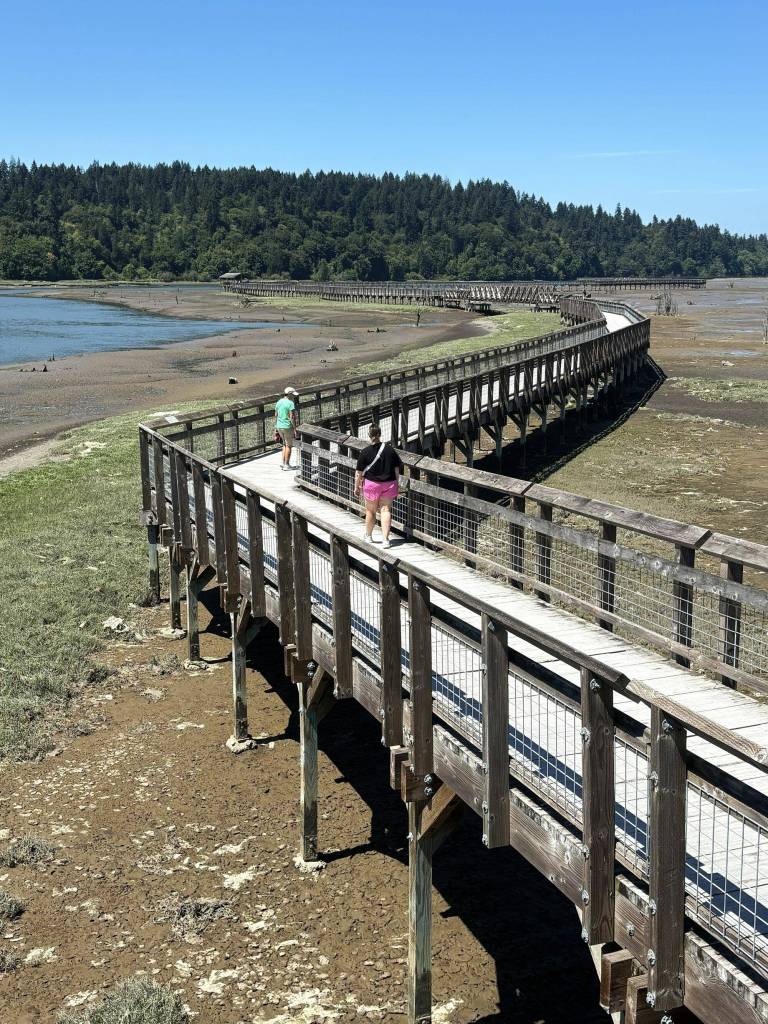
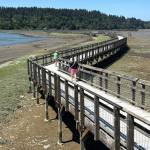
But the highlight, for many, is the Nisqually Estuary Boardwalk that extends one mile over the estuary and provides a landscape that changes with the tides.
Weather permitting, there are views of Mount Rainier and the Olympic Range. Nature permitting, visitors can spot harbor seals basking in the sun and birds diving into the river in hopes of scooping up a meal.
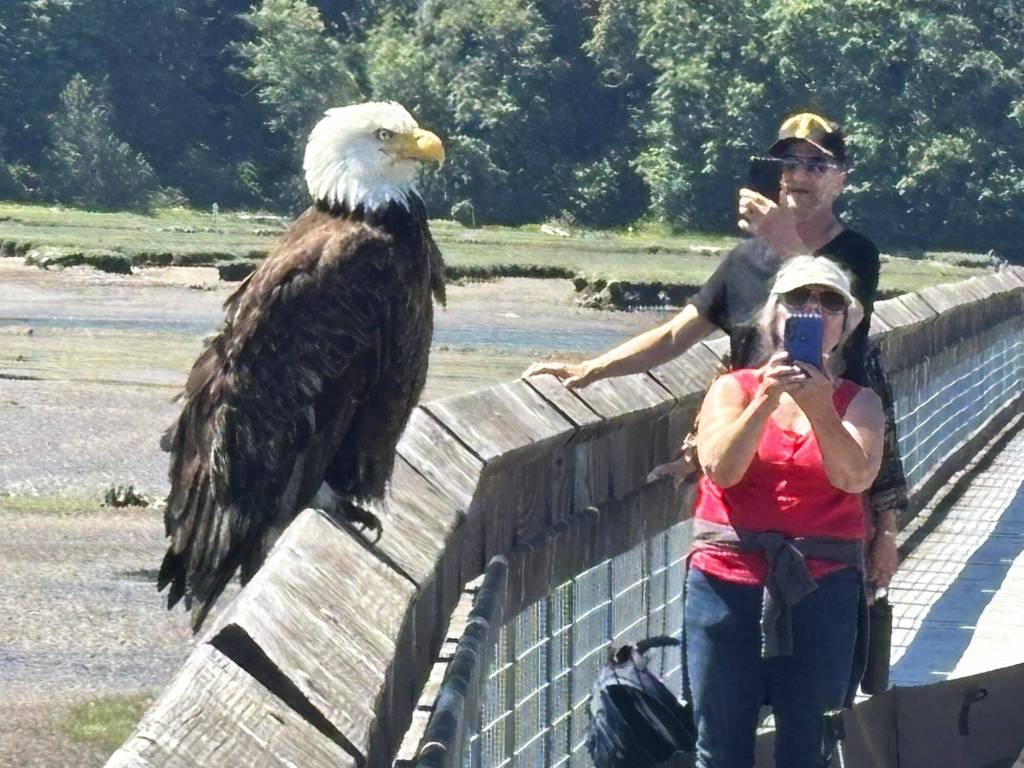
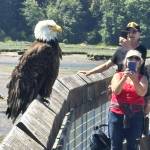
On a June afternoon guests were treated to a visit by a bald eagle that perched on the boardwalk railing and, seemingly, posed for pictures as folks walked by just a few feet away.
WHEN TO GO
The refuge is open from sunrise to sunset every day (check for major holidays). The visitor center is open 9 a.m. to 4 p.m. Wednesday through Sunday.
As noted above, ocean tides impact the estuary. At times, the view is mostly mudflats. As the tide rises the scenery changes, along with wildlife viewing. Interested? Check out tides.net.
HISTORY
Billy Frank Jr. Nisqually National Wildlife Refuge was established in 1974. It came with approval by the Migratory Bird Conservation Commission and was purchased with Duck Stamp dollars – all aimed at preserving the Nisqually River Delta.
The effort was meant to benefit fish, wildlife, plants and, especially, migratory birds. The overriding thought was to guard against development.
The refuge was renamed in 2016 to honor Billy Frank Jr., a member of the Nisqually Indian Tribe. He was a leader in the conservation movement and a successful activist for treaty rights.
A major development came in 2008 when the century-old Brown Farm Dike was removed. It was originally built to hold back the tides and open the estuary for agricultural pursuits.
Of course, the Nisqually Delta’s history traces back millenia to the time when the Nisqually people called the area home. That was good until the Medicine Creek Treaty removed tribal members from their ancestral grounds and allowed pioneer settlers to take possession of land.
Alson Brown developed the dike system to turn his section of the delta into farmland and subsequent owners continued to farm the property, building the side-by-side barns seen today.
RULES TO FOLLOW
First, leave your furry friends home; the refuge is home to hundreds of species and (like national parks) the introduction of pets is not permitted.
To protect the peaceful nature of the preserve guests are asked to walk, no jogging allowed. And leave wheeled vehicles like bicycles and scooters off the grounds. Don’t even think of tossing a Frisbee and if some tells you to “go fly a kite” – well, just don’t.
On a more current note, drones have been added to the “do not bring” list.
FEES AND PASSES
Anyone who enjoys federal lands can consider one of the many “America The Beautiful” passes, sold at refuge locations and online. For example, an annual pass for U.S. residents is $80; a lifetime pass for seniors also is $80; an annual senior pass is $20; in addition, free passes are available for members of the U.S. military and those with a documented, permanent disability.
At many sites a pass allows entry for everyone in a single, personal vehicle.
For one-time visitors, there is a minimal entry fee.
GETTING THERE
The trip begins with your favorite route from the Plateau to Interstate 5. Once on the freeway head south; the refuge might show an Olympia address but if you’re anywhere near the state capital you’ve gone too far (the refuge is eight miles northeast of Olympia).
Veer off the freeway at Exit 114 and watch for signage. Turn right at the traffic light, drive under the freeway and make another right turn into the refuge. Park at the visitor center that has a Brown Farm Road N.E. address.
THE WILDLIFE SYSTEM
According to its website, the National Wildlife Refuge System is a network of 572 national wildlife refuges and 38 wetland management districts. It is said there’s a refuge within an hour’s drive of most major metropolitan areas and more than 68 million Americans visit refuges every year.